AI agents are not your “coworkers”
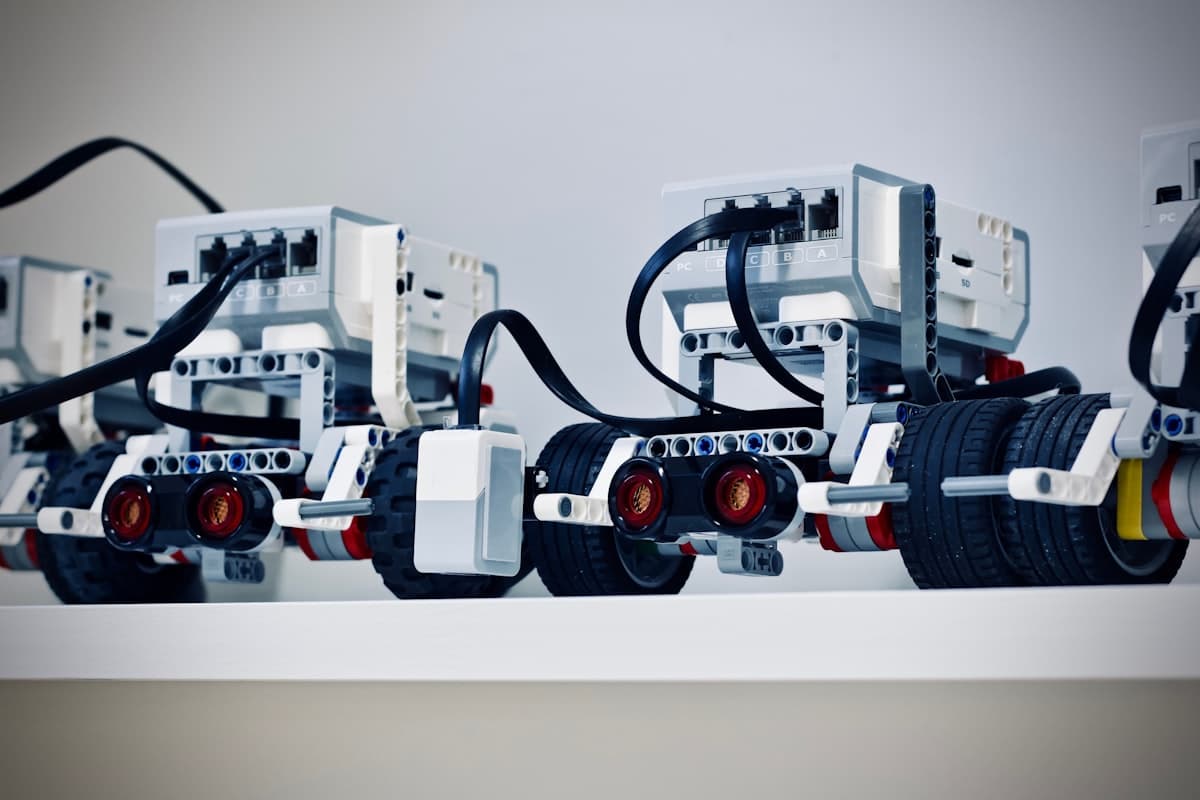
Treating AI agents as 'employees' rather than software tools reduces human accountability and leads to worse performance, according to recent research.
This story originally appeared in The Algorithm, our weekly newsletter on AI. To get stories like this in your inbox first, sign up here.
Imagine coming in to work to learn that a new underling will report to you. The worker is not a person but an AI tool—one that your company nonetheless calls Alex, an “employee” with a title and defined responsibilities. How well do you think you would work with Alex?
If you’re anything like the managers recently studied by Emma Wiles, a Boston University business professor, treating Alex as a “coworker” and not a software tool would lead you to do a worse job. Wiles found that people caught 18% fewer errors when the work was said to have come from an agentic “AI employee” rather than a chatbot. It turns out that what’s in a name matters. A lot.
This is an alarming glimpse of the future Silicon Valley is hurling us toward. Last year Nvidia’s CEO, Jensen Huang, talked about workplaces of “digital humans.” Since April, Microsoft, OpenAI, Anthropic, and Google have all released new tools oriented toward managing teams of AI agents, many of which are explicitly advertised as digital colleagues with the flexibility and cognitive power of actual humans. And nearly a third of the 1,261 managers who participated in Wiles’s study said their companies already frame AI agents as employees (23% even list them on org charts).
The technical progress of agentic AI is not all hot air, of course. Agents, which can effectively be thought of as AI tools programmed to work in a loop until they achieve a goal, have become measurably better at more complicated tasks. But it’s a huge leap to refer to these tools as coworkers or employees, and doing so will set unrealistic expectations for what AI can do while leaving the human employees supposedly responsible for them worse off.
That’s partially because, Wiles’s research suggests, it inverts our sense of who’s in charge. When an AI tool was framed as an employee, participants in the study saw themselves as less responsible for its output. They were also 44% more likely to escalate its questionable work to a manager for further review rather than trusting their own corrections (thus negating the time-saving purpose of using the AI agent in the first place).
That matters far beyond office culture: As AI agents are embedded into health care, warfare, education, and government, there’s a growing risk they’ll become a convenient place to dump blame for failures that are instead the product of bad human decisions, incentives, and oversight (recall how the bomb strike on a girls’ school in Iran was popularly blamed on Claude, when all signs point to a cascade of human errors).
“AI agents right now are being marketed as things that can replace humans, and I think that’s just a losing proposition,” says Daron Acemoglu, an economist at MIT who won the Nobel Prize in 2024 and studies AI’s impact on the economy. “They should instead be optimized so that they can improve human capabilities, which is not what they have [been] at the moment.”
What could that look like? Consider a new effort at Stanford, where researchers presented 1,500 workers in 104 jobs with information about what tasks AI could potentially do in their work and then asked what would actually be most helpful and productive. Workers did want automation in certain areas: Law clerks thought AI could help ensure that adequate progress was being made across cases, for example. But often the tasks that tech experts deemed most suitable for AI—like verifying customer credit ratings for sales reps—were what the actual workers said they definitely did not want or need an agent to do.
Which brings us back to Alex. Calling Alex an employee is easy—and convenient, especially when something goes wrong—but it’s a branding exercise. It doesn’t make the tool more fit for the job, and as Wiles’s research shows, it makes the humans around it worse at theirs. And recall that they are the ones with the agency that AI is trying to replicate. They deserve better than Alex.
Source: MIT Technology Review AI